Quick Answer
Some of the most well-known Ayurvedic herbs known to support immunity include Tulsi, Ashwagandha, Giloy, Amla, Turmeric, Ginger, and Neem. These herbs have been traditionally used for generations in Indian households to help support the body’s natural defences and overall wellness, especially during seasonal changes. While these herbs are widely trusted in Ayurvedic tradition, they work best as part of a balanced lifestyle and are not a substitute for medical care. Always consult your doctor before starting any new herb or supplement, especially if you have existing health conditions.
With seasonal changes, pollution, and busy lifestyles taking a toll on our health, many people are turning back to traditional remedies their grandparents swore by. In this article, we’ll explore Ayurvedic herbs known to support immunity, how each one is traditionally used, and simple ways to include them in your daily routine.
Why Immunity Matters More Than Ever
Your immune system works around the clock, defending your body against everyday exposure to germs, seasonal changes, and environmental stress. Various factors — including diet, sleep, stress, and lifestyle habits — can influence how well your body’s natural defences function. This is exactly why Ayurvedic herbs known to support immunity have remained so popular in Indian households, often passed down through generations as part of everyday wellness routines.
Common Factors That May Weaken Immune Function
Before exploring specific herbs, it helps to understand what commonly affects immune health in the first place:
- Poor sleep quality — Inadequate rest can affect how efficiently the immune system functions.
- Chronic stress — Prolonged stress is linked to weakened immune response over time.
- Nutritional gaps — Diets lacking in essential vitamins and minerals can affect the body’s natural defences.
- Sedentary lifestyle — Lack of physical activity can impact overall immune resilience.
- Seasonal changes — Many people notice increased susceptibility to colds and seasonal discomfort during weather transitions.
- Environmental factors — Pollution and exposure to environmental toxins can place additional strain on the body’s systems.
Recognising these everyday factors is helpful because Ayurvedic herbs known to support immunity are traditionally used alongside broader lifestyle habits, not as a standalone fix.
Signs That May Indicate Your Immunity Needs Support
While everyone’s body is different, some common signs people associate with lowered immune resilience include:
- Frequent colds or seasonal discomfort
- Feeling fatigued more often than usual
- Slower recovery from minor illnesses
- Digestive discomfort that seems to recur often
- Generally feeling run-down despite adequate rest
If you notice these signs persisting, it’s a good idea to consult a doctor for proper evaluation, since immune-related concerns can have many different underlying causes.
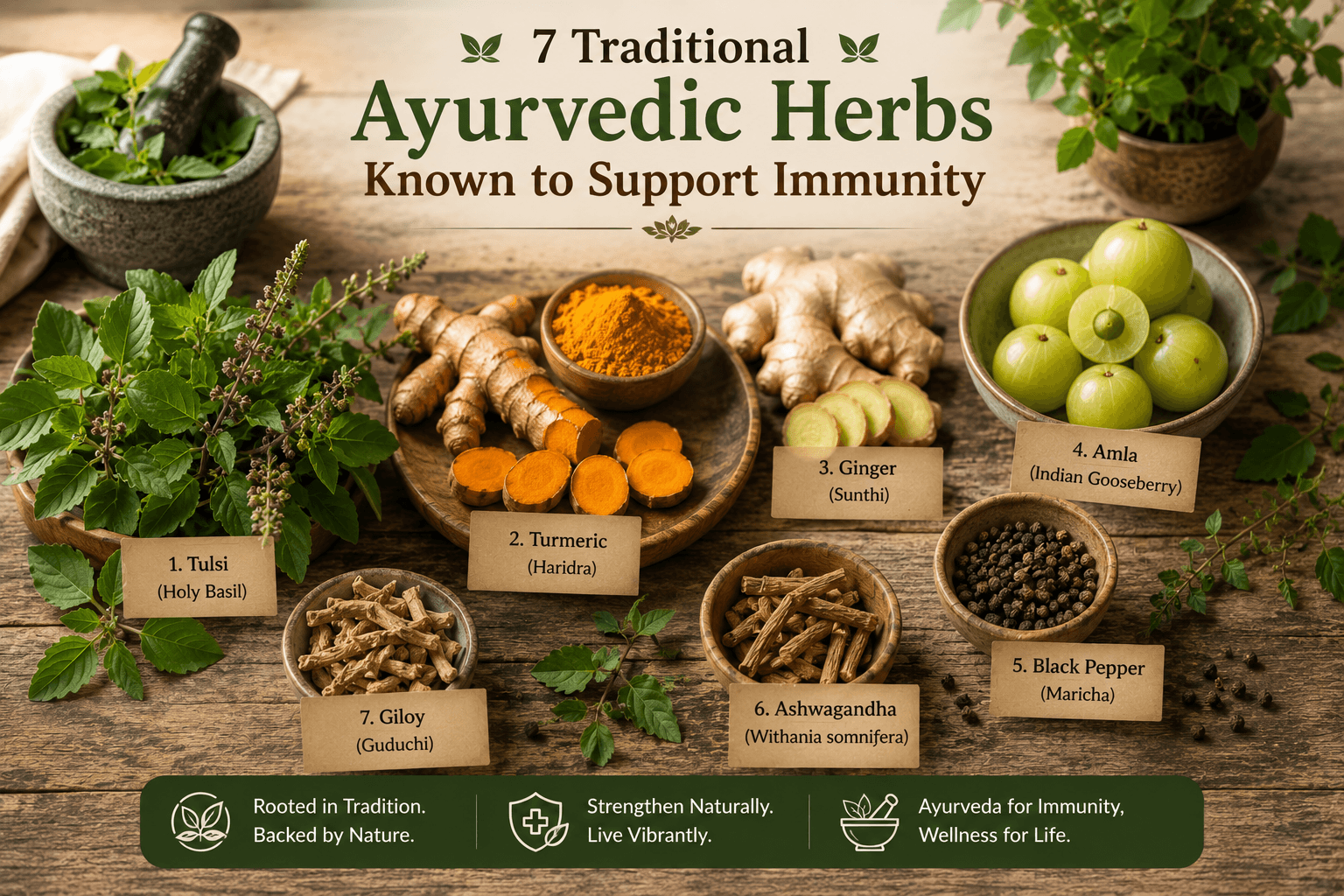
7 Traditional Ayurvedic Herbs Known to Support Immunity
Here’s a closer look at the Ayurvedic herbs known to support immunity that have stood the test of time in Indian households:
1. Tulsi (Holy Basil)
Tulsi is often called the “Queen of Herbs” in Ayurveda and is one of the most widely used Ayurvedic herbs known to support immunity. Traditionally consumed as tea, added to warm water, or chewed fresh, Tulsi is believed to help support respiratory health and overall wellness, especially during seasonal transitions.
2. Ashwagandha
Known as an adaptogen, Ashwagandha is traditionally used in Ayurveda to help the body adapt to stress, which in turn is believed to support overall immune resilience. It’s commonly consumed as a powder mixed with warm milk or water, often at night.
3. Giloy (Guduchi)
Giloy is one of the most respected herbs in Ayurvedic tradition, often referred to as “Amrita” or the root of immortality. It’s traditionally used to help support the body’s natural defence mechanisms and is commonly consumed as juice, powder, or in tablet form.
4. Amla (Indian Gooseberry)
Rich in natural Vitamin C and antioxidants, Amla is traditionally believed to aid in maintaining overall immune health. It can be consumed fresh, as juice, in powder form, or as part of traditional formulations like Chyawanprash.
5. Turmeric (Haldi)
A staple in Indian kitchens, Turmeric contains curcumin, a compound traditionally used in Ayurveda to help support the body’s natural inflammatory response and overall wellness. Warm turmeric milk, or “Haldi Doodh,” is a well-known traditional remedy, especially during seasonal changes.
6. Ginger (Adrak)
Ginger is traditionally used in Ayurveda to help support digestion and respiratory comfort, both of which play a role in overall immune wellness. It’s commonly added to tea, warm water, or used fresh in cooking.
7. Neem
Neem is traditionally valued in Ayurveda for its wide-ranging wellness properties, including support for healthy skin and the body’s natural defence systems. It’s available as juice, powder, or capsules, though its distinctly bitter taste means many people prefer it in supplement form.
Together, these Ayurvedic herbs known to support immunity reflect a rich tradition of using nature’s resources to support the body’s natural resilience, often passed down through generations of Indian households.
Simple Ways to Include These Herbs in Your Daily Routine
Incorporating Ayurvedic herbs known to support immunity doesn’t need to be complicated. Here are some practical, everyday ways to include them:
- Start your day with Tulsi or ginger tea — A warm, comforting way to begin your morning routine.
- Add turmeric to your cooking — A simple pinch in dal, sabzi, or milk can make it part of your daily diet.
- Take Ashwagandha powder at night — Traditionally mixed with warm milk before bed to support relaxation and overall wellness.
- Include Amla in your diet — Fresh Amla, juice, or Chyawanprash are easy ways to include it regularly.
- Keep Giloy juice or tablets on hand — Especially useful during seasonal transitions when many people turn to it traditionally.
Consistency matters more than quantity — small, regular amounts of these herbs, incorporated into your daily routine, tend to be more meaningful than occasional, large doses.
Lifestyle Habits That Complement These Herbs
Ayurvedic herbs known to support immunity work best when combined with supportive daily habits:
- Prioritise good sleep — Aim for 7-8 hours of quality rest each night.
- Manage stress — Practices like meditation, deep breathing, or yoga can help support overall balance.
- Eat a balanced, nutrient-rich diet — Include plenty of fresh fruits, vegetables, and whole grains.
- Stay physically active — Regular movement supports overall wellness and resilience.
- Stay hydrated — Adequate water intake supports the body’s natural functions.
- Maintain good hygiene practices — Simple habits like regular handwashing support overall health, especially during seasonal transitions.
The Ayurvedic Perspective on Immunity (Vyadhi Kshamatva)
In Ayurveda, the concept closest to modern-day immunity is known as “Vyadhi Kshamatva,” which broadly refers to the body’s natural capacity to resist and recover from illness. Ayurveda views immunity not as a single, isolated system, but as a reflection of overall balance — encompassing digestion (Agni), tissue health (Dhatus), and the elimination of toxins (Ama) from the body.
According to Ayurvedic principles, strong immunity is closely tied to healthy digestion, since well-digested food is believed to nourish “Ojas” — a subtle essence considered responsible for vitality, strength, and resilience against illness. This is why Ayurveda’s approach to immunity typically combines herbs with digestive support, a balanced diet, adequate rest, and stress management, rather than relying on any single herb in isolation.
This holistic understanding is one of the reasons Ayurvedic herbs known to support immunity continue to be valued across generations — they’re traditionally used as part of a broader lifestyle approach to wellness, not as a standalone quick fix.
Things to Keep in Mind Before Using These Herbs
While generally well-tolerated, a few points are worth considering before adding these herbs to your routine:
- Choose good-quality, standardized herbal products from reputable brands.
- Some herbs, like Ashwagandha, may interact with certain medications or health conditions, so it’s important to check with your doctor first.
- Pregnant or breastfeeding women should consult a doctor before using any new herbal supplement.
- These herbs are meant to support overall wellness and should not replace prescribed medical treatment.
Frequently Asked Questions
1. Which Ayurvedic herb is best for immunity?
There isn’t a single “best” herb, as Tulsi, Giloy, Ashwagandha, and Amla are each traditionally used for different aspects of immune support. Many Ayurvedic formulations combine several of these herbs together for a more holistic effect.
2. Can I take multiple Ayurvedic immunity herbs together?
Many traditional Ayurvedic formulations do combine herbs like Tulsi, Giloy, and Ashwagandha together. However, it’s best to consult a doctor or Ayurvedic practitioner before combining multiple supplements, especially if you have existing health conditions.
3. How long does it take for Ayurvedic herbs to support immunity?
Ayurveda generally works gradually, supporting the body’s natural balance over weeks rather than overnight. Consistency in use, along with supportive lifestyle habits, is key to experiencing meaningful benefits over time.
A Gentle Note Before You Go
These Ayurvedic herbs known to support immunity reflect centuries of traditional wisdom passed down through Indian households, offering gentle, natural support for everyday wellness. If you’re looking for convenient, everyday support, Healthywe’s range of immunity support herbal supplements is made using 100% natural, vegetarian ingredients rooted in traditional Ayurvedic wisdom.
As always, herbal supplements are meant to support your overall wellness, not replace medical care. Please consult your doctor or an Ayurvedic practitioner for proper diagnosis, and before making any changes to a prescribed treatment.
Explore our natural wellness range at www.healthywewellness.com/shop.