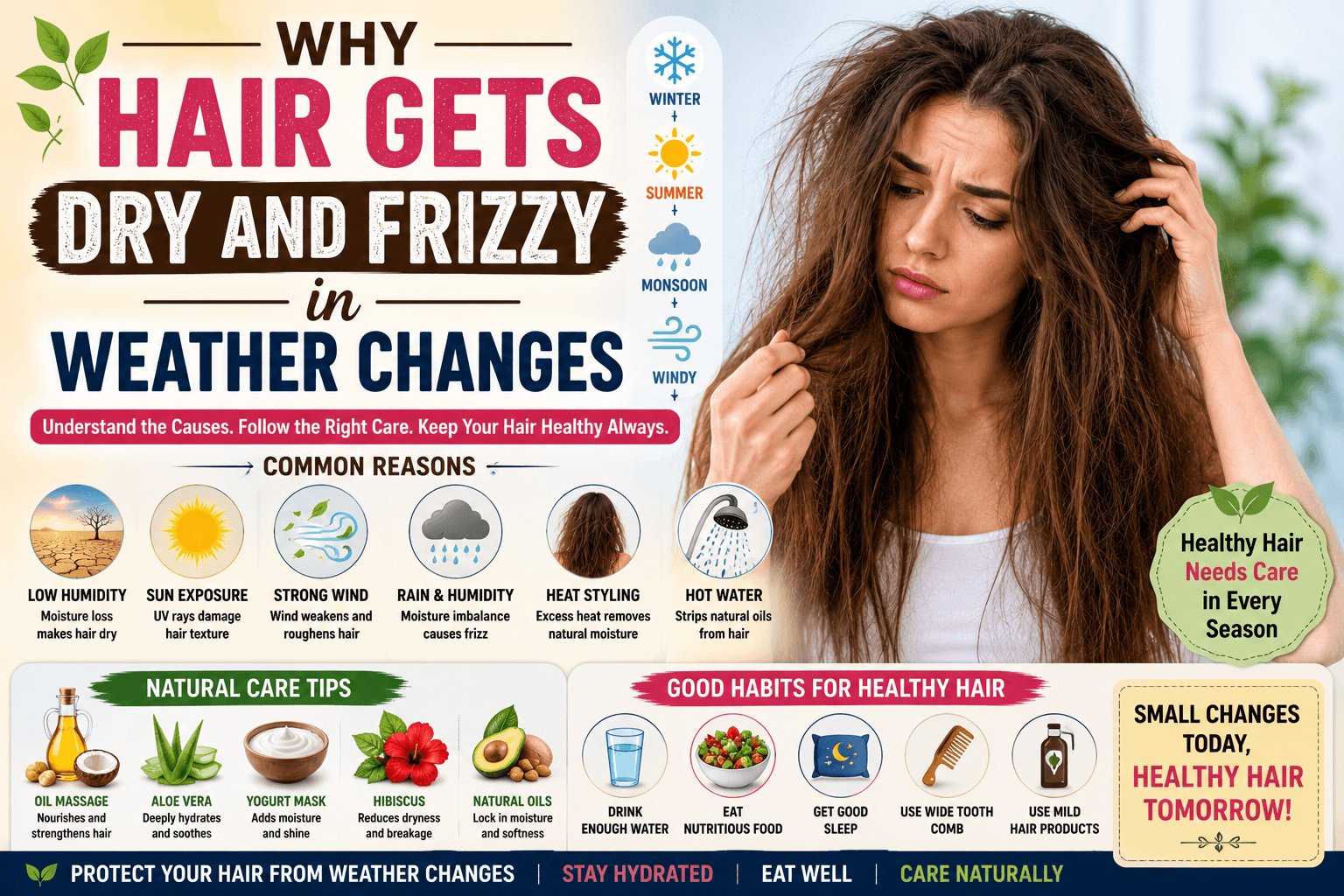
Why Hair Gets Dry and Frizzy in Weather Changes
Quick Answer
Dry hair and frizz often happen when weather changes affect the moisture balance of your hair. Cold air, strong sunlight, humidity, wind, and indoor heating can make hair lose moisture. Therefore, gentle hair care, proper hydration, and a healthy diet may help keep hair soft and manageable.
Introduction
Does your hair become rough, dry, or frizzy when the weather changes?
If yes, you are not alone.
Many people notice healthy hair becoming dull during winter, summer, or the rainy season.
However, weather is only one part of the story.
Daily habits, hair care routines, and nutrition also play important roles.
Therefore, understanding the causes of dry hair can help you protect your hair throughout the year.
What is Dry Hair?
Dry hair happens when your hair does not have enough moisture or natural oils.
As a result, it may feel rough and look dull.
Dry hair is also more likely to become frizzy, tangled, and difficult to manage.
Fortunately, simple lifestyle and hair care changes may help improve hair health.
Causes of Dry Hair
Several factors may lead to dry hair, especially during changing weather.
1. Cold Weather
Cold air contains less moisture.
Therefore, hair may lose its natural hydration.
As a result, hair often feels rough during winter.
2. Hot Sunlight
Too much sunlight can dry the outer layer of the hair.
Consequently, hair may become brittle and frizzy.
3. Humidity
Humid weather causes hair to absorb moisture from the air.
As a result, frizz often becomes more noticeable.
4. Strong Wind
Wind can make hair lose moisture quickly.
Therefore, hair may become tangled and dry.
5. Hot Water
Very hot water removes natural oils from the scalp.
Consequently, hair may become dry after washing.
6. Heat Styling Tools
Hair dryers, straighteners, and curling irons expose hair to high heat.
Over time, this may damage the hair surface.
7. Frequent Shampooing
Washing hair too often may remove protective natural oils.
As a result, hair may become dry.
8. Poor Nutrition
Hair needs vitamins, minerals, protein, and healthy fats.
Without proper nutrition, hair may lose its shine and softness.
9. Hard Water
Hard water contains minerals that can build up on hair.
Therefore, hair may feel rough and lifeless.
10. Dehydration
Not drinking enough water may affect your body’s overall hydration.
Consequently, hair may also appear dry.
Signs and Symptoms
Common signs include:
- Dry texture
- Frizzy hair
- Split ends
- Dull appearance
- Hair breakage
- Tangled hair
- Rough feeling
- Reduced shine
Risk Factors
Some people are more likely to develop dry hair.
These include:
- Frequent heat styling
- Daily shampooing
- Chemical hair treatments
- Dry climate
- Poor diet
- Low water intake
- Regular swimming
- Aging
How It Affects Daily Life
Dry hair can affect confidence and comfort.
For example:
- Hair becomes difficult to style.
- Frizz increases throughout the day.
- Hair breaks more easily.
- Split ends appear more often.
- Hair loses its natural shine.
Therefore, healthy hair care is important.
Benefits of Early Management
Taking care of dry hair early may help:
- Improve hair softness
- Reduce frizz
- Prevent breakage
- Improve hair shine
- Make styling easier
- Support healthier hair growth
Natural Ways to Support Better Hair Health
Oil Your Hair Regularly
Natural oils help reduce moisture loss.
For example, coconut oil and almond oil may help protect hair.
Use Lukewarm Water
Wash your hair with lukewarm instead of very hot water.
Therefore, natural oils remain on the scalp.
Choose a Mild Shampoo
Gentle shampoos help clean hair without removing too much moisture.
Condition After Every Wash
Conditioner helps smooth the hair surface.
As a result, hair becomes easier to manage.
Protect Hair Outdoors
Wear a scarf, cap, or hat during harsh weather.
Consequently, your hair stays better protected.
Diet Tips
Healthy nutrition supports healthy hair.
Eat More:
✅ Spinach ✅ Carrots ✅ Citrus fruits ✅ Lentils ✅ Paneer ✅ Yogurt ✅ Almonds ✅ Walnuts
Drink:
✅ Plenty of water ✅ Coconut water
Limit:
❌ Sugary drinks ❌ Highly processed foods ❌ Excess junk food
Lifestyle Tips
Simple habits help protect your hair.
- Drink enough water.
- Sleep 7–8 hours.
- Reduce stress.
- Avoid excessive heat styling.
- Trim split ends regularly.
- Protect hair from harsh weather.
As a result, your hair stays healthier throughout the year.
Common Mistakes to Avoid
Avoid these habits:
❌ Washing hair with hot water
❌ Using heat tools every day
❌ Skipping conditioner
❌ Washing hair too often
❌ Ignoring split ends
❌ Poor nutrition
When Should You Seek Professional Advice?
Consult a dermatologist or hair specialist if:
- Hair becomes extremely dry
- Hair breaks excessively
- Hair loss increases suddenly
- Scalp becomes itchy or painful
- Home care does not improve your condition
Professional advice can help identify any underlying cause.
Natural Ways to Control Late-Night Craving
Frequently Asked Questions
Why does hair become dry when the weather changes?
Weather changes can reduce hair moisture because of cold air, heat, wind, humidity, or indoor heating.
Can humidity make hair frizzy?
Yes. Humid air allows hair to absorb extra moisture, which may increase frizz.
Does drinking water help dry hair?
Proper hydration supports overall health and may help maintain healthier-looking hair.
How often should I wash dry hair?
This depends on your hair type. Many people with dry hair benefit from avoiding excessive washing. A hair specialist can provide personalized advice.
What is the best natural oil for dry hair?
Coconut oil and almond oil are commonly used to help reduce moisture loss and improve hair softness.
Final Thoughts
Dry hair during weather changes is a common problem.
Fortunately, healthy habits, proper hydration, balanced nutrition, gentle hair care, and weather protection can help reduce dryness and frizz.
Although seasonal changes cannot be avoided, your daily routine can make a big difference.
If dryness becomes severe or is accompanied by heavy hair loss or scalp problems, consult a qualified healthcare professional for proper evaluation.